Top 25 Hotels in Savannah: Where to Stay in July 2026
Savannah. You arrive expecting Spanish moss and antebellum facades, and you get them — but what actually lodges in memory is stranger and more specific. The way sound behaves under a live oak canopy. The smell of pluff mud drifting up from the river at low tide on a warm evening. The fact that James Oglethorpe’s 1733 street grid, with its twenty-two surviving squares, still dictates how you walk, where you pause, and how often you get pleasantly lost between Bull Street and Abercorn.
This is a city built at walking pace, and that has consequences for where you sleep. The Historic Landmark District covers roughly two and a half square miles — small enough that almost everything is theoretically walkable, large enough that the wrong side of it means a twenty-minute trek in July humidity every time you want a cocktail. The difference between a room on Ellis Square and a room out past Victory Drive is not measured in miles. It is measured in whether you spend your vacation strolling or summoning rideshares.
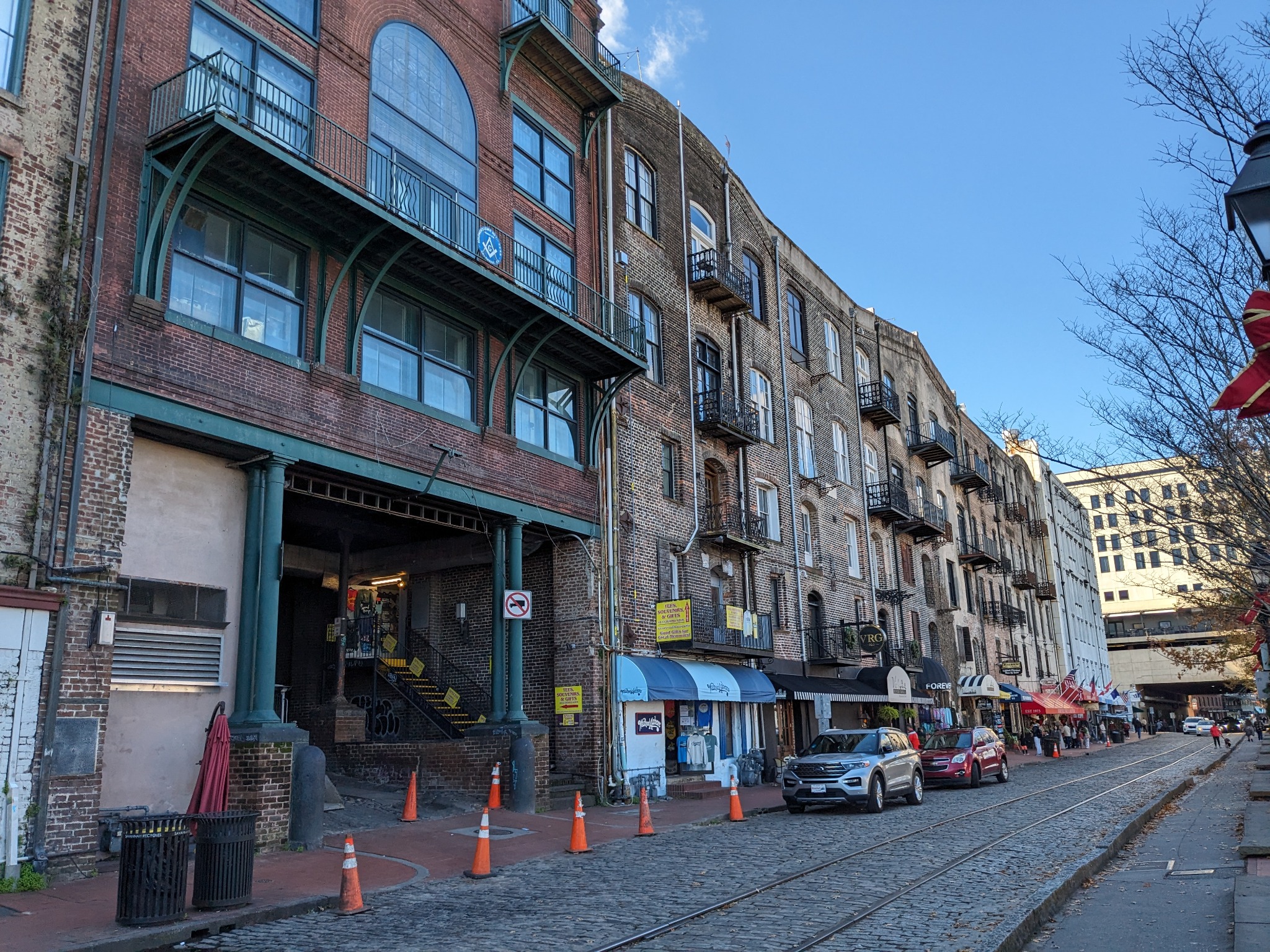
Savannah’s neighborhoods each run on their own frequency. River Street is cobblestone, cargo-ship traffic and cotton warehouses converted into hotels and bars — loud, touristy, undeniably atmospheric, and a genuine haul back up the ballast-stone stairs. The North Historic District around City Market and Ellis Square is the commercial heart, with Broughton Street’s boutiques and restaurants running east-west through the middle of it.
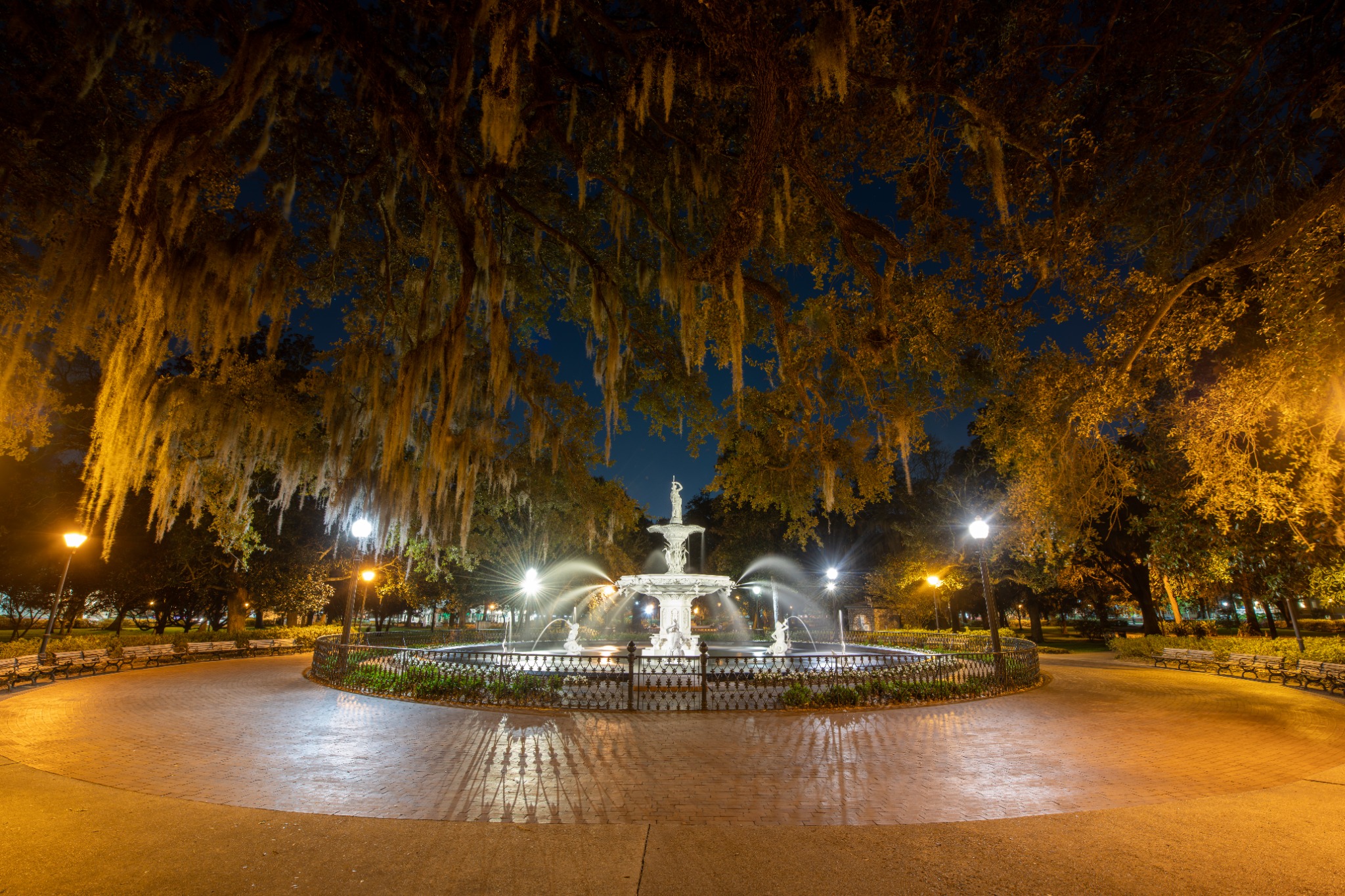
The South Historic District, anchored by Forsyth Park’s 1858 fountain and the SCAD campus buildings scattered among the squares, is quieter, leafier, and where most of the city’s serious luxury hotels have landed. Below that, the Victorian District unfurls fifty blocks of turreted, gingerbread-trimmed houses, and beyond it the Starland District has become the city’s creative engine — murals, food halls, vintage shops, breweries, and the sort of restaurants that locals guard. To the east, Eastern Wharf is Savannah’s newest riverfront development, and half an hour further out, Tybee Island offers five miles of Atlantic beach.
The hotel scene has changed faster in the last five years than in the previous fifty. Savannah spent decades as a bed-and-breakfast town — grand mansions carved into a dozen antique-filled rooms, sherry in the parlor at five, a hostess who remembered your name. Those inns still exist and several of them are excellent. But a wave of capital arrived: a 1912 power plant reborn as a JW Marriott with more than ten dining venues, a Luxury Collection property built from scratch beside Forsyth Park, a Thompson on the eastern riverfront, and most recently a pair of design-led newcomers that have collected international press and, in one case, a Michelin Key. Savannah now supports a genuine spectrum, from $200 riverfront rooms to suites that cost more per night than a flight to Europe.
Which brings us to July. Peak Savannah is spring — azaleas, the St. Patrick’s Day parade that swells the city’s population several times over, and the sort of weather that makes the squares feel invented for human happiness. July is the opposite proposition: highs in the low nineties, humidity that has weight, and afternoon thunderstorms that arrive on a near-daily schedule. It is also, correspondingly, one of the better months to negotiate with a Savannah hotel. Rooms that vanish in March are available in July, and the properties with pools, deep porches, shaded courtyards and serious air conditioning suddenly justify their premiums. This guide is updated for July 2026, and where it matters, we have flagged which hotels actually earn their keep in summer heat.
The twenty-five hotels below were ranked after comparing guest review patterns across major booking platforms, editorial coverage in the travel press, professional guide recognition, and — critically — the practical business of location, walkability, room quality and what you get for the money. Each entry includes an honest drawback, because no hotel suits everyone and a list where all twenty-five sound flawless is a list nobody should trust.
Quick Picks: Best Hotels in Savannah
- Best overall hotel: Hotel Bardo Savannah
- Best new opening: Municipal Grand
- Best luxury hotel: Perry Lane Hotel, a Luxury Collection Hotel
- Best boutique hotel: The Drayton Hotel Savannah, Curio Collection by Hilton
- Best hotel for first-time visitors: Andaz Savannah
- Best hotel for couples: The Gastonian
- Best hotel for families: The Westin Savannah Harbor Golf Resort & Spa
- Best hotel for nightlife: JW Marriott Savannah Plant Riverside District
- Best hotel for value: The Cotton Sail Hotel Savannah, Tapestry Collection by Hilton
- Best hotel for river views: The Alida, Savannah, a Tribute Portfolio Hotel
- Best historic inn: The Kehoe House
- Best design hotel: Thompson Savannah
- Best pool for a July stay: Hotel Bardo Savannah
- Best adults-only stay: Bellwether House
How We Chose the Top 25 Hotels in Savannah
Ranking hotels in a city this compact is less about identifying the “best” property in the abstract and more about matching properties to the traveler standing in front of them. A honeymooning couple and a family of five with a rental car want almost opposite things from Savannah, and both can be right.
Here is what shaped the order:
- Guest review patterns, not review averages. A 9.1 score means little on its own. We looked for what recurs — whether complaints cluster around noise, housekeeping, thin walls, or slow service, and whether praise concentrates on staff, food or the building itself.
- Location measured in walking minutes. Savannah rewards proximity to a square more than proximity to a highway. We weighted how close each property sits to Forsyth Park, Broughton Street, City Market, River Street and the SCAD-dotted southern squares.
- The building. Savannah’s best hotels are frequently its oldest structures — cotton warehouses, Queen Anne mansions, a Second Empire townhouse, a decommissioned power station. Adaptive reuse done well is worth paying for. Done badly, it means uneven floors and a bathroom wedged into a former closet.
- Room quality and comfort, including bed quality, bathroom condition, soundproofing and — a real variable here — how effectively the air conditioning handles a July afternoon.
- Food and drink on site. Savannah’s hotel restaurants have become destinations in their own right, and a good one materially changes a stay.
- Service reputation, particularly at the smaller inns where a single innkeeper’s competence defines the entire experience.
- Value within category. We are not comparing a $700 suite against a $220 room. We are asking whether each hotel delivers against what it charges relative to its direct competitors.
- Recognition from credible sources — Michelin Guide hotel selections, Travel + Leisure’s annual lists, AAA Diamond ratings, and consistent placement in editorial round-ups — treated as one input among several rather than the deciding factor.
- Current relevance for July 2026, including recent renovations, rebrandings, ownership changes and new openings. Nothing on this list has closed, and nothing is included on reputation alone.
Where a property has a real flaw, we say so. That is the point of the exercise.
The Top 25 Hotels in Savannah
1. Hotel Bardo Savannah
Bardo did something Savannah hotels had not previously managed: it made the city feel like a resort without making it feel like it had left the city. The property sits on the western edge of Forsyth Park, and its reinvention — a complete reimagining of a long-standing property on the park — traded the region’s default vocabulary of chintz and mahogany for something looser and more Mediterranean. Vaulted white plaster, pistachio and terracotta, rattan, bold tile, oversized fringed umbrellas. It reads less “Old South” than “someone spent a formative summer in Positano and came home with opinions.”
The centerpiece is the courtyard pool, which is the single most consequential amenity on this entire list for anyone visiting in July. It is not a token plunge pool bolted onto a rooftop as an afterthought. It is a proper swimming pool flanked by a bar, ringed by loungers, and busy enough by mid-afternoon that the scene becomes the point. Saint Bibiana, the coastal Italian restaurant, has become one of the harder reservations in town — house-made pasta, seasonal Georgia produce, a room that runs loud and elegant simultaneously. Saltgrass, the wellness space, handles the recovery side. The 149 rooms lean generous by Savannah standards, and the property has been recognized with a Michelin Key, a distinction the guide reserves for stays with genuine character.
Why stay here: It is the only hotel in Savannah that functions convincingly as a destination in itself. You can arrive, never book a tour, spend three days moving between the pool, the restaurant and Forsyth Park across the street, and feel you did the city correctly.
Best for: Couples, design-minded travelers, anyone visiting between May and September, and groups of friends who want a base with a social center of gravity.
Location: Forsyth Park, South Historic District. Thirty acres of live oaks and the city’s most photographed fountain are directly across the road. Broughton Street shopping is roughly a fifteen-minute walk north; River Street is further and better reached by rideshare in summer heat.
What stands out: The pool and pool bar, unquestionably. Saint Bibiana runs a close second — it is a restaurant people book flights around, not just a hotel dining room.
Potential drawback: Rates sit at the top of the Savannah market and the property knows exactly what it has. The scene-forward energy that makes it fun also makes it noisier than a traditional inn — if you want hushed, antique-filled Southern gentility, this is the wrong address. Poolside space fills quickly on summer weekends.
Click here to check availability and current rates
2. Municipal Grand
The newest serious arrival in Savannah, and the one currently generating the most noise. Municipal Grand opened as a forty-four-room boutique property in the Historic District and promptly landed on Travel + Leisure’s It List for 2026 — the magazine’s annual roundup of the hundred best new hotels worldwide — while climbing to the top of Tripadvisor’s Savannah rankings on the strength of guest reviews. That is an unusual double: critical recognition and popular consensus rarely converge this fast.
What earns it is restraint. Rooms open through a deep green vestibule into spaces built around custom millwork, plush banquettes, velvet headboards, hardwood floors, hand-cut tile and artwork sourced from Savannah’s own creative community — which, in a SCAD town, is a deeper bench than the phrase usually implies. The effect is residential rather than hotel-like: it feels less like checking in and more like being handed the keys to a well-edited apartment. Several rooms come with private terraces over downtown; the suites stretch out and add deep soaking tubs.
Downstairs, the restored historic lobby houses Municipal Bar, an all-day room serving cocktails, seasonal plates and everyday classics. Hot Eye is the moodier late-night option. Sun Club, the rooftop pool and bar, sits above the tree line with a view across the canopy — a meaningful asset in July.
Why stay here: It combines the intimacy of a small property with the polish of a much larger one, and the service consistently outperforms the room count. Forty-four rooms means staff who recognize you by the second morning.
Best for: Design-led travelers, couples, returning visitors who have already done the trolley tours, and anyone who prefers a small hotel to a big one.
Location: Central Historic District, within short walking distance of the squares, River Street and Forsyth Park in roughly opposite directions — a genuinely useful middle position.
What stands out: The rooftop pool at Sun Club, and the level of finish in the rooms. The millwork and tile work are of a standard you do not usually see outside significantly more expensive hotels.
Potential drawback: Newness cuts both ways — demand is high, the room count is low, and July 2026 availability may be tighter than the season would suggest. There is no full-service spa, and the compact footprint means fewer facilities than a large-brand property.
Click here to see today’s rates and room options
3. Perry Lane Hotel, a Luxury Collection Hotel, Savannah
Perry Lane was purpose-built, which in a city obsessed with historic fabric sounds like a liability and turns out to be an advantage. Because nobody had to negotiate with a nineteenth-century floor plan, the rooms are properly proportioned, the bathrooms are full-size, the elevators work, and the soundproofing is what you would expect from modern construction. It occupies most of a block in the South Historic District, close enough to Forsyth Park to walk there before breakfast and close enough to the SCAD buildings to feel plugged into the student energy that keeps this end of town awake.
The interiors are dense with curated objects — the property leans hard into a collector’s-house conceit, with books, art and curiosities arranged with more intent than most hotels bother with. There are roughly 167 rooms including a dozen suites, and a penthouse with a wraparound terrace for anyone whose budget has stopped being a consideration.
Food and drink are unusually strong for a Marriott-family property. Emporium Kitchen & Wine Market runs all day and doubles as a venue for wine tastings and cooking classes. The Wayward handles cocktails with more attitude than the average hotel bar. Peregrin, the rooftop, was reworked in partnership with SCADpro into a conservatory-styled space, and remains one of the more pleasant places in Savannah to watch the light go orange over the rooftops.
Why stay here: The most complete full-service luxury package in the city — rooftop, pool, three distinct food and drink venues, Marriott Bonvoy earning and redemption, and rooms that do not require you to forgive anything on account of the building’s age.
Best for: Luxury travelers, Bonvoy loyalists, business travelers who still want somewhere good to drink, and couples who want amenities alongside atmosphere.
Location: South Historic District, a short walk from Forsyth Park and well positioned for the southern squares. Broughton Street is walkable; River Street is a longer haul.
What stands out: Peregrin’s rooftop conservatory treatment, and the sheer breadth of the food and beverage program relative to hotels of similar size.
Potential drawback: Because it is new construction dressed in period references, it lacks the genuine architectural drama of Savannah’s converted mansions and warehouses — some guests find it handsome but not soulful. It is also large enough that service can feel less personal than at the city’s small inns.
Click here to compare prices for your travel dates
4. Thompson Savannah
Thompson Savannah anchors Eastern Wharf, the riverfront development that extends the city eastward from the Historic District, and it is the strongest argument yet for staying slightly outside the traditional tourist core. The building is contemporary and unapologetic about it — clean lines, a lot of glass, a lobby that reads more Charleston-adjacent-modern than Savannah-historic — but the material palette borrows enough from the Lowcountry that it does not feel airlifted in from another city.
Rooms and suites run large by local standards, many with river views, and the pool deck with private cabanas is genuinely useful in summer. Fleeting, the ground-floor restaurant, works in elevated coastal Southern cooking under executive chef Robert Newton, whose menus lean on hyperlocal sourcing without turning it into a lecture. Bar Julian, on the roof, is the tallest rooftop bar in the modern city and delivers a Mediterranean-leaning menu with a panorama across the Savannah River toward the container terminal — which sounds unromantic until you have watched a fully laden ship slide past at sunset, at which point it becomes the best view in town.
Why stay here: Space, views and calm. If you have stayed downtown before and found the squares charming but the crowds relentless, Thompson gives you the river without the River Street bachelorette parties.
Best for: Couples, design-conscious travelers, World of Hyatt members, and anyone prioritizing room size and a quieter base.
Location: Eastern Wharf, on the riverfront where the Historic District gives way to the new development. The riverwalk connects you back toward downtown on foot, though it is a genuine walk rather than a stroll — figure fifteen to twenty-five minutes to the core depending on your destination and your tolerance for July.
What stands out: Bar Julian’s elevation and the river panorama, plus a pool deck that actually has shade.
Potential drawback: Eastern Wharf is still filling in. The immediate surroundings lack the accumulated texture of the Historic District, and if your ideal Savannah evening involves wandering out the door into a warren of old streets, you will be taking a car or committing to the walk. Not the pick for a first-time visitor with two nights.
Click here to view rooms, photos, and availability
5. Mansion on Forsyth Park, Autograph Collection
Nothing else in Savannah looks like this. The Mansion is a Kessler Collection property built around an 1888 Victorian-Romanesque mansion — all red brick, ironwork and gothic ambition — with a contemporary wing added in 2005 to carry the room count. What makes it memorable is the art: more than four hundred pieces distributed through the public spaces and corridors, including a substantial body of work by the German painter Peter Keil, whose loud, gestural canvases collide with the building’s Victorian bones in a way that should not work and mostly does. Walking the hallways here is an activity, not a transit.
700 Drayton, the restaurant, occupies the original mansion’s ground floor alongside a wine room, multiple bars and private dining rooms, with a balcony looking across to Forsyth Park. There is a spa, a pool, and a culinary school on site — the last of which is a genuinely distinctive offering and worth checking against your dates. The Kessler group also runs a shuttle between the Mansion and its sister property, the Bohemian, on River Street, which effectively hands you a free connection between the two ends of the Historic District.
Why stay here: Theatrical, maximalist and genuinely singular. In a city where a lot of luxury hotels converge on the same tasteful palette, the Mansion commits to a point of view.
Best for: Art lovers, couples celebrating something, travelers who prefer character over minimalism, and anyone who wants Forsyth Park on their doorstep with full hotel services attached.
Location: Directly opposite Forsyth Park in the South Historic District, on Drayton Street. Excellent for the park, the Victorian District and the southern squares; a longer walk to River Street, mitigated by the shuttle.
What stands out: The art collection, and the original mansion’s ground-floor rooms, which are worth exploring even if you never eat at 700 Drayton.
Potential drawback: The aesthetic is polarizing — guests who love it love it completely, and guests who expected serene Southern restraint sometimes find it overwhelming. Rooms in the newer wing do not carry the same drama as the public spaces, so manage expectations if you are booking an entry-level category.
Click here to check the latest hotel deals
6. JW Marriott Savannah Plant Riverside District
Savannah Electric’s 1912 power plant sat derelict on the western riverfront for decades before it was folded into one of the largest urban revitalization projects the city has attempted. The result is less a hotel than a compound: an AAA Four Diamond property spread across multiple buildings with more than ten food and drink venues, a dinosaur skeleton in the atrium, a geology exhibit, live music most nights, and a river promenade running the length of it. Subtle it is not.
For the right traveler this is enormous fun. Stone & Webster Chophouse handles prime steak and seafood in the old plant’s cathedral-scale interior. Savannah Tequila Co. does agave flights with the river out the window. Electric Moon Skytop Lounge, on the roof, adds a slide, lawn games and a DJ to the equation and functions as a nightclub after dark. The industrial architecture — riveted steel, brick, exposed structure — gives the whole thing a scale nothing else downtown can match.
Why stay here: If you want everything on one property and you want the evenings loud, nowhere else in Savannah comes close. It is also the strongest option for groups who cannot agree on a restaurant.
Best for: Nightlife, groups, bachelorette and bachelor parties, families with teenagers, and Bonvoy members chasing a flagship stay.
Location: The western end of River Street, in the Plant Riverside District. River Street proper runs east from here toward City Market and the main Historic District; the walk is flat, cobbled and atmospheric, but the return trip after dinner is longer than it looks on a map.
What stands out: The building. A 1912 power station converted at this scale is a genuine piece of adaptive reuse, and the atrium alone justifies a walk through even if you stay elsewhere.
Potential drawback: Noise is the recurring theme in guest feedback — the district hosts events, the bars run late, and rooms facing the action can be affected. It is also the least “Savannah” hotel on this list in atmosphere; if you came for squares and Spanish moss, you will be walking to find them.
Click here to see if this hotel is available for your dates
7. The Alida, Savannah, a Tribute Portfolio Hotel
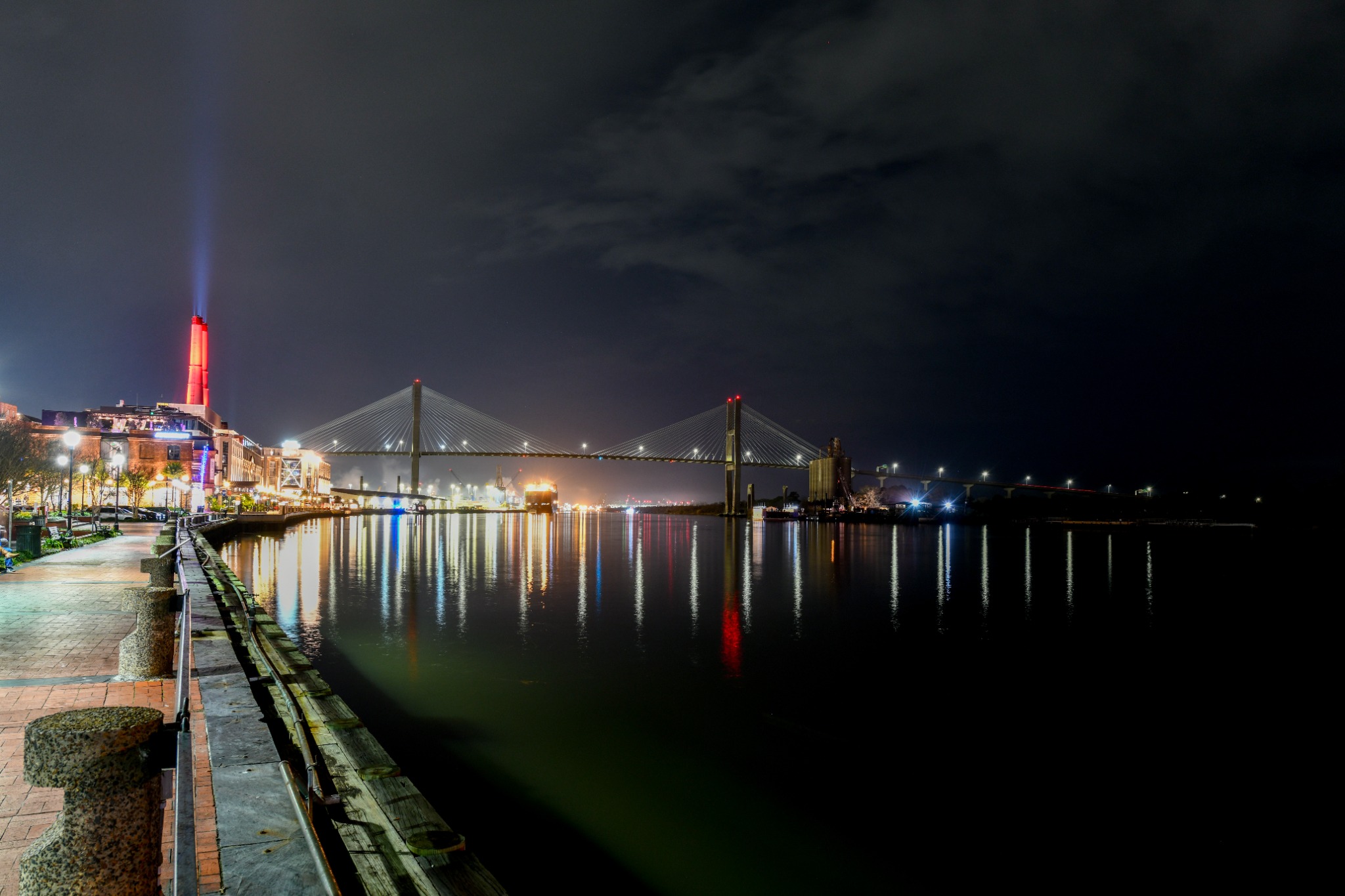
The Alida gets one thing exactly right that most Savannah hotels get partly right: the view. Sitting on the riverfront at the Bay Street level, its rooftop bar — The Lost Square — looks out over the Savannah River, the Talmadge Memorial Bridge and the roofline of the entire Historic District at once. In winter the terrace fills with heated igloos; in July it is where you go at seven in the evening when the heat finally breaks.
Downstairs, Rhett does elevated Southern cooking and draws enough local traffic to feel like a restaurant rather than a captive audience. The design throughout leans into Savannah’s maritime and craft heritage without turning it into a costume — woven textures, brass, timber, a lot of commissioned local art. Rooms are contemporary and comfortable rather than grand, and river-facing categories are worth the upcharge in a way they frequently are not elsewhere.
Why stay here: The best combination of river views, walkable location and current design on the northern edge of the Historic District.
Best for: First-time visitors, couples, and travelers who want to be near River Street without being on it.
Location: Bay Street riverfront, minutes from City Market, Ellis Square and Broughton Street shopping. One of the most efficient bases on this list for covering the northern district on foot.
What stands out: The Lost Square rooftop. The food menu up there is deliberately limited, but the sightline is among the best any Savannah hotel can offer a guest.
Potential drawback: The rooftop’s popularity with non-guests means it can be busy and occasionally hard to get into on weekend evenings. Standard rooms without a river outlook feel considerably less special than the price positioning suggests.
Click here to compare booking options
8. The Drayton Hotel Savannah, Curio Collection by Hilton
Housed in one of the oldest buildings in the city — an 1890s structure on Drayton Street — the Drayton was Curio Collection’s Savannah debut and remains the most convincingly boutique of the big-brand properties here. The interiors run to a soft art deco register: curved lines, moody lighting, deep colors, a lobby that encourages sitting rather than transiting.
The drinking and dining program is the reason to book. St. Neo’s Brasserie applies classic French technique to Lowcountry ingredients. The Vinyl Room is a small, dark cocktail lounge of the sort Savannah has historically been short on. Pendant Terrace and Bar sits on the roof with views toward City Hall and the river. The property charges a mandatory daily destination fee, but unusually it returns real value — a daily food and beverage credit, plus a “Golden Hour” window each afternoon that includes drinks and an appetizer at the rooftop. Read the fee line before you dismiss it.
Why stay here: Boutique feel, historic building, three genuinely distinct venues under one roof, and a destination charge that actually gives something back.
Best for: Couples, Hilton Honors members, cocktail-focused travelers, and anyone who wants boutique character with brand-standard reliability behind it.
Location: North Historic District on Drayton Street, close to Johnson Square, City Hall and Broughton Street. Very central; you will walk everywhere in the northern half of the district.
What stands out: The Vinyl Room. Intimate, well-made drinks, and a welcome counterpoint to Savannah’s louder bar culture.
Potential drawback: The rooftop draws mixed reactions — some guests find the view and the energy underwhelming compared with the taller terraces at Thompson or The Alida. Rooms in a nineteenth-century building vary in size and layout more than a brand booking page suggests.
Click here to view current offers and guest reviews
9. The Kehoe House
If you only stay in one Savannah inn in your life, make it this one. The Kehoe House is an 1892 Queen Anne mansion on Columbia Square, built for the Irish-born ironmonger William Kehoe, and the ironwork throughout is not decorative flourish — it is the owner advertising his trade. Turrets, ornate metalwork, a facade that stops pedestrians. It is on the National Register of Historic Places, and it was named a Tripadvisor Best of the Best hotel in Savannah for 2025, which in a city with well over a hundred properties is not a small distinction.
Inside, the scale is what surprises people. Rooms are larger than the bed-and-breakfast format usually allows, several open onto balconies, and the public rooms carry Victorian detail — chandeliers, high ceilings, heavy millwork — without tipping into museum stiffness. Breakfast is a proper hot Southern affair rather than a pastry basket, and the staff-to-guest ratio produces the kind of service larger hotels spend fortunes trying to simulate.
Why stay here: It is the fullest expression of what Savannah’s historic inn tradition does well, executed at a consistently high standard.
Best for: Couples, romantic escapes, history-minded travelers, and anyone who wants to sleep inside the architecture they came to look at.
Location: Columbia Square, in the eastern half of the Historic District. Quiet, residential, beautiful, and within comfortable walking distance of Broughton Street and the riverfront.
What stands out: The building itself, and the breakfast — both of which guests bring up repeatedly and unprompted.
Potential drawback: No pool, no gym, no room service, and a small-property structure that will frustrate anyone expecting full hotel amenities. The house’s reputation for ghost stories is either an attraction or a deterrent depending entirely on temperament.
Click here to explore rooms and updated rates
10. Andaz Savannah
The Andaz is Savannah’s most sensible first-timer’s hotel, and that is meant as praise. It sits on Ellis Square — the reconstructed square that reopened as public space over a parking garage in 2010 — which puts you within a two-minute walk of City Market, five minutes of River Street, and a straight line down Barnard to almost everywhere else. Very few hotels in this city solve the location problem this cleanly.
The property began life as the Avia before Hyatt acquired and rebranded it, and it carries the Andaz signature: an open, lobby-centric ground floor where reception, bar and restaurant blur into a single social space. 22 Square, the restaurant, works a market-to-table menu with coastal Georgia leanings and is at its best at breakfast. There is a pool, which matters in July, and the whole operation is consistently among the highest-ranked hotels in the city on the major review platforms.
Why stay here: Location, reliability and a pool, at a price point below the city’s top-tier properties. It removes the most common first-visit mistake, which is booking somewhere that looks central on a map and isn’t.
Best for: First-time visitors, World of Hyatt members, business travelers, and short two-night trips where walking time is at a premium.
Location: Ellis Square, North Historic District — arguably the single most convenient hotel address in Savannah.
What stands out: The position. You can walk out of the lobby and be inside City Market before you have finished checking your phone.
Potential drawback: Food and beverage draws inconsistent reviews, with breakfast generally outperforming dinner. The design is contemporary-neutral rather than distinctly Savannah, and City Market’s proximity means street noise on weekend nights for lower rooms on that side.
Click here to check this hotel’s latest availability
11. The Gastonian
Two 1868 Regency-Italianate mansions joined into a single seventeen-room inn, sitting on Gaston Street in one of the quietest and prettiest stretches of the South Historic District. The Gastonian has been collecting accolades for decades — it appeared on Condé Nast Traveler’s Gold List and among its top small hotels in the United States — and it has aged into the role rather than coasting on it.
Each room is individually decorated with period antiques, and many include working fireplaces and claw-foot soaking tubs. There is a walled garden, a sun deck, and the full ritual apparatus of the Southern inn: hot breakfast, afternoon wine and hors d’oeuvres, sweets in the evening. What separates it from its peers is a consistency of standard across all seventeen rooms — there is no obvious dud category to avoid.
Why stay here: It is the most romantic address in Savannah, and the one most likely to make a couple decide to come back annually.
Best for: Couples, anniversaries, honeymoons, and travelers who actively want to be away from crowds.
Location: Gaston Street, a block from Forsyth Park in the South Historic District. Peaceful, leafy, entirely residential in feel.
What stands out: The antiques and the fireplaces — this is a property that has resisted the pressure to modernize its way into anonymity.
Potential drawback: Deeply traditional, which means it will feel fussy to travelers who prefer contemporary design. No pool or fitness facilities, limited elevator access typical of converted mansions, and a location that is a real walk from River Street nightlife.
Click here to check rates for your dates
12. Kimpton Brice Hotel
The Brice is the most relaxed good hotel in Savannah. Kimpton’s house style — colorful, unpretentious, aggressively pet-friendly, with a complimentary evening social hour that other brands have never quite replicated — suits a city that is itself fairly informal beneath the antebellum styling. The building sits on East Bay Street toward the eastern end of the district, a short walk from the riverfront and close to Emmet Park.
The courtyard pool is the property’s best asset in summer: a garden setting with cushioned loungers, umbrellas, poolside service, and adults-only hours early in the morning for anyone who wants to swim in peace. Pacci Italian Kitchen + Bar handles food, working chef-driven Italian with Southern inflections, and reviews consistently rate it stronger at breakfast and happy hour than at dinner. Bicycles are available for guests, which in flat, compact Savannah is more useful than it sounds.
Why stay here: Pool, pets, personality and a genuinely warm front-of-house culture, at a price that usually undercuts the top tier.
Best for: Travelers with dogs, younger couples, IHG One Rewards members, and anyone who values a pool and a social bar over antique furniture.
Location: East Bay Street, eastern Historic District, a few minutes from the river and walkable to Broughton Street.
What stands out: The garden courtyard pool, which is more attractive and better shaded than most hotel pools in the city.
Potential drawback: The pool is occasionally opened to paying non-guests for daytime events, and guests have reported that these can be loud. Dinner at Pacci divides opinion. Room sizes are modest relative to the newer builds.
Click here to see photos, rooms and live pricing
13. The DeSoto
The DeSoto has been part of Savannah’s civic furniture since 1890, and though the current fifteen-storey building replaced the original Victorian hotel, the name has carried continuously through more than a century of presidents, celebrities and visiting dignitaries. It overlooks Madison Square, which is one of the finest squares in the city and puts you almost exactly midway between Forsyth Park and River Street.
A comprehensive renovation modernized the interiors, and the second-floor rooftop deck now holds an outdoor pool, generous loungers, fire pits and a bar — a strong combination for a July stay, and one that most historic-district hotels cannot match. The 1540 Room handles Southern cooking with locally sourced produce and is a reliable option for breakfast without leaving the building. Because the DeSoto is tall by Savannah standards, upper-floor rooms deliver views across the tree canopy that low-rise inns simply cannot offer.
Why stay here: Central location, a real pool, elevation, and pricing that generally sits below the newer luxury arrivals.
Best for: Families, value-focused travelers who still want a full-service hotel, and anyone who wants to walk both north and south from a single base.
Location: Madison Square, mid-Historic District on Liberty Street. Roughly equidistant from Forsyth Park and the riverfront.
What stands out: The rooftop pool deck over Madison Square, and the view from higher floors.
Potential drawback: It is a large, conventional hotel and the interiors, while updated, lack the individuality of Savannah’s smaller properties. Room quality varies by category and floor, and low-floor rooms lose the view that makes the building worth choosing.
Click here to compare room types and current prices
14. The Bohemian Hotel Savannah Riverfront, Autograph Collection
The Bohemian is the Mansion on Forsyth Park’s sister property under the Kessler banner, and it applies a similar art-forward instinct to a very different setting: right on the riverfront, with the cobbles of River Street below and freighters sliding past the windows. The interiors run dark and tactile — leather, timber, wrought iron, original artwork on nearly every wall — and the whole thing feels considerably more grown-up than the party atmosphere immediately outside would lead you to expect.
Rocks on the Roof, the rooftop bar, has been a Savannah fixture for years and remains one of the most reliable places in the city for a drink with a river view. River-facing rooms are the ones to book; interior categories are perfectly comfortable but forfeit the entire reason for staying here. Guests also get access to the shuttle running between the Bohemian and the Mansion, which effectively bridges the district’s two ends.
Why stay here: Riverfront position with more design intent than any of its immediate neighbors, plus a rooftop that locals still use.
Best for: Couples, first-time visitors who want River Street on their doorstep, and travelers who want atmosphere over amenity count.
Location: River Street / Bay Street, North Historic District. City Market and Ellis Square are minutes away on foot.
What stands out: Rocks on the Roof, and the moody, art-heavy interior treatment that sets it apart from the riverfront’s other conversions.
Potential drawback: River Street is loud, particularly on weekend nights and during festivals, and the hotel cannot fully insulate you from it. There is no pool, and rooms are on the compact side.
Click here to check availability and nightly rates
15. The Marshall House
Built in 1851 and pressed into service as a hospital during the Civil War, the Marshall House is the oldest continuously recognizable hotel in Savannah and sits directly on Broughton Street — which means you step out of the lobby into the city’s main shopping and restaurant artery. Original heart pine floors, exposed brick, and a wrought-iron balcony running the length of the second floor, lined with rocking chairs, give it a character that no renovation could manufacture.
The hotel leans into its documented history rather than sanitizing it, with archival photographs and artwork threaded through the corridors, and it appears on nearly every ghost tour itinerary in the city. Practical inclusions are generous: a nightly wine reception, breakfast by 45 Bistro — the on-site restaurant, which is well regarded independently of the hotel — robes in the rooms, and a concierge desk that knows the tour operators by name.
Why stay here: Genuine 1851 fabric on the best-connected street in Savannah, at a price that undercuts most of the district’s newer hotels.
Best for: History enthusiasts, shoppers, ghost-tour takers, and travelers who want an old building without inn-style formality.
Location: East Broughton Street, dead center of the Historic District. You can walk to nearly everything.
What stands out: The second-floor balcony. Booking a room with access to it turns a good stay into a memorable one.
Potential drawback: This is the most consistent complaint on the list: noise. Original floors transmit footsteps, walls are thin by modern standards, air conditioning units can be loud, and Broughton Street carries traffic. Light sleepers should request a quiet room explicitly or look elsewhere.
Click here to view rooms and check current pricing
16. Ballastone Inn
An 1838 mansion turned sixteen-room inn, the Ballastone has spent decades near the top of any credible list of Savannah’s traditional bed-and-breakfasts, and holds a AAA Four Diamond rating. The interiors are lush and layered — heavy drapery, antiques, four-poster beds, the kind of rooms where you notice the fabrics — and there is a courtyard for warm evenings.
The hospitality rhythm is the draw. Breakfast runs to fresh fruit, house-baked pastries and homemade granola, and an afternoon happy hour is served in the drawing room or on the patio depending on the weather. It sits close to City Market and the Juliette Gordon Low birthplace, making it one of the more centrally located inns in the city.
Why stay here: Classic Savannah innkeeping executed at a high standard, in a more central position than most of its peers.
Best for: Couples, traditionalists, and travelers who want the inn experience without a long walk to dinner.
Location: Oglethorpe Avenue, North Historic District, near Chippewa Square and City Market.
What stands out: The afternoon happy hour and the drawing-room atmosphere — this is an inn that understands the social part of the format.
Potential drawback: Oglethorpe Avenue is one of downtown Savannah’s busier through-roads, and guests in front-facing rooms regularly mention traffic noise. Request a rear or courtyard-side room. As with most historic inns, there is no pool or gym.
Click here to check this inn’s availability
17. Hamilton-Turner Inn
The Second Empire mansard roof and cast-iron detailing make the Hamilton-Turner one of the most photographed buildings on Lafayette Square, which is saying something in a neighborhood that also contains the Cathedral Basilica of St. John the Baptist and the Flannery O’Connor childhood home. Built in 1873 for the jeweler Samuel Pugh Hamilton, it earned the nickname “the Grand Victorian Lady” and later a supporting role in Savannah’s most famous piece of nonfiction.
The interiors are formal without being austere — high ceilings, period furnishings, a wide central staircase — and the standard inclusions cover a full hot breakfast and a daily manager’s reception. The square-facing rooms are the ones to hold out for; the view of Lafayette Square through live oaks in the morning is the reason people book this address.
Why stay here: One of the finest surviving Second Empire buildings in the American South, on one of Savannah’s most beautiful squares.
Best for: Architecture enthusiasts, couples, and readers working their way around the city’s literary landmarks.
Location: Lafayette Square, mid-to-south Historic District. Walkable to Forsyth Park in one direction and Broughton Street in the other.
What stands out: The exterior and the square-facing rooms. Few hotel windows anywhere frame a better view.
Potential drawback: Guest reviews are more variable here than at the Kehoe House or the Gastonian, with recurring mentions of inconsistent housekeeping. Rooms differ considerably in size and outlook, so research the specific category rather than trusting the headline images.
Click here to compare rooms and rates
18. Bellwether House
Bellwether House does something no other property in Savannah attempts: it builds an entire stay around wellness and adult quiet. Two adjoining 1876 townhouses were reworked in 2020 into a white-facaded, wrought-iron-trimmed inn with an 18-and-over policy, and the result is a genuinely different proposition from the city’s other historic conversions.
The programming is where it separates itself. Included in a stay: breakfast, afternoon high tea, evening champagne, and seasonal wellness sessions. Bookable on top: massage, facials, private yoga, hot aromatherapy soaks in copper tubs, and a hammam-style Turkish bath, which is not a facility you expect to find behind a Victorian townhouse facade in coastal Georgia. There is a firepit in the garden and a coffee bar on site. Rooms are pale, airy and considerably less cluttered than the Savannah inn norm.
Why stay here: A wellness-oriented, child-free retreat inside a historic building — a combination nothing else in the city offers.
Best for: Couples, solo travelers, girls’ trips, and anyone whose ideal holiday includes a spa treatment and an early night.
Location: South Historic District, a short walk from Monterey Square and within easy reach of Forsyth Park.
What stands out: The hammam and the copper soaking tubs, plus a daily rhythm of tea, champagne and cookies that guests describe with real affection.
Potential drawback: Reviews are polarized — the majority are glowing, but a minority report maintenance and cleanliness lapses that are hard to overlook at this price point. The 18-plus policy rules it out entirely for families.
Click here to see availability and current offers
19. Eliza Thompson House
Jones Street is the street Savannah puts on postcards — a canyon of live oaks, brick townhouses and gas lamps that gave rise to the local expression “lovelier than Jones Street.” The Eliza Thompson House was the first house built on it, in 1847, which makes staying here a small piece of civic history as well as a comfortable night’s sleep.
The inn wraps around a courtyard garden with a fountain, and the hosted schedule is unusually full: hot Southern breakfast in the morning, wine and cheese in the early evening, and dessert with coffee before bed, all included. Rooms are split between the original house and the carriage house, with the former carrying more period character and the latter offering more privacy. It is a warm, unfussy operation that has been doing this a long time.
Why stay here: The address. Waking up on Jones Street and walking out under the oaks before the tour groups arrive is one of the genuine pleasures of a Savannah visit.
Best for: Couples, first-time visitors wanting an authentic inn experience, and travelers who value included food and drink.
Location: Jones Street, South Historic District. Forsyth Park is a few minutes’ walk south; Broughton Street around ten minutes north.
What stands out: The courtyard, which is the best place in the property to spend a July evening, and the three-meal hosting rhythm.
Potential drawback: Rooms in a house of this age vary widely in size, and some of the smaller categories are genuinely small. There is no elevator in parts of the property, no pool, and limited on-site parking.
Click here to check dates and room availability
20. Hyatt Regency Savannah
The Hyatt Regency is not the most charming hotel in Savannah and does not pretend to be. What it is, unambiguously, is the most conveniently positioned large hotel in the city — a 351-room property straddling Bay Street and River Street, with a soaring atrium and direct access to the riverfront from the lower level. For anyone travelling with mobility considerations, the ability to reach River Street without descending the notoriously uneven ballast-stone stairs is a substantial practical advantage.
River-view rooms look straight onto the shipping channel, and watching container vessels pass at eye level from bed is a better amenity than it sounds. Breakfast draws consistent praise in guest reviews, particularly the omelettes and the shrimp and grits. There is an indoor pool and a fitness center, and the scale of the property means group and conference facilities that the boutique competition cannot offer.
Why stay here: Location and accessibility, backed by full-service infrastructure and World of Hyatt earning.
Best for: Families, business travelers, conference attendees, travelers with accessibility needs, and Hyatt loyalists.
Location: Bay Street and River Street, North Historic District, adjacent to City Hall and minutes from City Market.
What stands out: Direct riverfront access and river-facing rooms at a price well below the boutique properties nearby.
Potential drawback: The 1980s atrium architecture is functional rather than beautiful, and the building interrupts the historic riverfront in a way local preservationists have never forgiven. Rooms are corporate in feel. If atmosphere is your priority, spend the money elsewhere.
Click here to compare availability for your stay
21. The Westin Savannah Harbor Golf Resort & Spa
Across the river on Hutchinson Island, the Westin is the only property on this list that functions as a full resort, and the calculation it asks you to make is straightforward: you trade immediate walkability for space, facilities and a view back at the Savannah skyline that downtown guests pay a premium for and still don’t get.
The resort holds an eighteen-hole championship golf course, a spa, a large outdoor pool complex, tennis, and the room sizes that come with building on an island rather than squeezing into a historic block. The connection to downtown is a water taxi across the river — a short, scenic crossing that neatly solves Savannah’s two most irritating problems, parking and traffic. For families, the arithmetic is compelling: kids get a pool, parents get a golf course and a spa, and the Historic District is a boat ride away whenever anyone wants it.
Why stay here: Resort amenities and space at prices that frequently sit below comparable-category downtown hotels, with a skyline view included.
Best for: Families, golfers, groups needing multiple rooms, and travelers with a car who do not want to pay downtown valet rates.
Location: Hutchinson Island, directly across the Savannah River from River Street, connected by ferry.
What stands out: The water taxi. It converts what could feel like exile into a genuinely pleasant twice-daily ritual.
Potential drawback: You are dependent on the ferry schedule, which does not run all night — late evenings downtown mean a rideshare around via the bridge. Hutchinson Island has almost nothing beyond the resort itself, so dining options off-property require crossing the water.
Click here to view resort rates and room options
22. River Street Inn
A cotton warehouse built in the early nineteenth century, when Savannah handled a substantial share of the world’s cotton trade, converted into a hotel that has kept the bones honest. Exposed brick, heavy timber, uneven ballast-stone entrances, and a position directly on the cobbles of River Street with rooms looking out over the shipping channel. The property is regularly cited in guidebooks and travel press, and it has an easy, unpolished authenticity that the newer riverfront conversions work hard to imitate.
River-view rooms have small balconies, and the entertainment value of watching enormous container ships pass within what feels like touching distance does not diminish over a three-night stay. The building’s split-level design — with entrances on both River Street below and Bay Street above — is quirky and occasionally confusing, but it means you can leave from whichever level suits your destination.
Why stay here: The most atmospheric River Street address for the money, in a genuine antebellum warehouse rather than a modern building wearing brick.
Best for: First-time visitors who want to be in the middle of it, history-minded travelers, and anyone chasing river views on a mid-range budget.
Location: River Street, North Historic District, with upper-level access to Bay Street.
What stands out: The original warehouse structure, and balcony rooms directly over the water.
Potential drawback: River Street is the loudest address in Savannah — bars, buskers, and the low rumble of ship traffic. The cobblestones are punishing for wheeled luggage and anyone with unsteady footing. Rooms are dated relative to the newer competition.
Click here to check riverfront room availability
23. AC Hotel Savannah Historic District
The newest big-brand arrival on the riverfront, opened in spring 2025, and a useful reminder that “new build” in Savannah does not have to mean bland. The AC formula — European-influenced, spare, dark wood and stone, no clutter — reads as a deliberate palate cleanser after a day among Victorian antiques. Rooms are efficient and well laid out, and a number come with balconies facing the river.
Lavender Rooftop Kitchen & Bar is the property’s calling card, sitting high enough over the water to compete with the city’s better-established terraces, and early guest feedback has been notably positive on both the staff and the sightlines. It slots into the market as a strong mid-to-upper option: less expensive than the Alida next door on the same stretch of riverfront, considerably newer than most of its competition.
Why stay here: A brand-new room with a river balcony and a good rooftop, without the pricing of the city’s flagship properties.
Best for: Modern-minimalist travelers, Bonvoy members, couples on a mid-range budget, and business travelers.
Location: The edge of the Historic District along the river, walkable to City Market, Ellis Square and Broughton Street.
What stands out: Lavender Rooftop, and river-facing balcony rooms where you can watch the shipping traffic from your own chair rather than a shared bar.
Potential drawback: The AC brand is deliberately pared back — limited food service beyond the rooftop and lobby bar, and no pool. The contemporary design carries none of Savannah’s historic character, which for some travelers is exactly the wrong choice of hotel in exactly the right city.
Click here to explore this hotel’s current rates
24. The Cotton Sail Hotel Savannah, Tapestry Collection by Hilton
Another nineteenth-century cotton warehouse conversion on the riverfront, the Cotton Sail runs to fifty-six rooms and occupies a useful middle position in the Savannah market — historic building, brand backing, and rates that consistently undercut the neighboring properties on the same stretch of Bay Street. Rooms retain warehouse features, and many have small balconies over the river.
The rooftop bar, Top Deck, has been part of Savannah’s drinking geography for over a decade and remains a solid perch for sunset over the Talmadge Bridge. Service draws warm reviews consistently — the small staff is a recurring theme in positive feedback — and the hotel’s location at the top of the River Street stairs means you are above the noise while still being thirty seconds from it.
Why stay here: Best value on the riverfront for a historic building with a rooftop and a brand loyalty program behind it.
Best for: Value-focused travelers, Hilton Honors members, couples on shorter trips, and first-timers prioritizing location over luxury.
Location: West Bay Street at the riverfront, close to City Market, Ellis Square and the Plant Riverside District.
What stands out: The price-to-position ratio, and Top Deck’s bridge views.
Potential drawback: The balconies are genuinely small — closer to a Juliet balcony than a terrace — and guest reviews are more mixed than at the higher-ranked properties, with some noting dated finishes. Bay Street traffic noise affects front-facing rooms.
Click here to compare this hotel’s prices
25. The Presidents’ Quarters Inn
A pair of restored Federalist-style mansions dating to around 1855 on Oglethorpe Square, the Presidents’ Quarters is the quiet answer to a common Savannah frustration: historic inns with beautiful public rooms and disappointingly cramped bedrooms. Here the rooms and suites are unusually generous, decorated in soft, restrained colors rather than the heavy Victorian palette, and several open onto private balconies or the walled courtyard garden.
Each room is named for an American president who visited Savannah, which is either charming or slightly earnest depending on your disposition, and the hosted schedule covers a full Southern breakfast and evening wine in the reception rooms. Oglethorpe Square puts you a block from the Owens-Thomas House & Slave Quarters, one of the most rigorously interpreted historic house museums in the South, and within easy reach of both Broughton Street and the river.
Why stay here: Space. If you have stayed in Savannah inns before and found the rooms tight, this is the correction.
Best for: Couples wanting room to spread out, longer stays, and travelers who want inn hospitality without antique overload.
Location: Oglethorpe Square, mid-Historic District. Quiet, central, and walkable in every direction.
What stands out: Room size and the courtyard garden, plus a genuinely peaceful square that most tour routes pass through rather than linger in.
Potential drawback: Lower profile than the Kehoe House or the Gastonian, and the interiors — while comfortable — are less distinctive than the top-tier inns. No pool, gym or restaurant on site.
Click here to check this inn’s latest rates
Two further properties narrowly missed the cut and deserve mention: Olde Harbour Inn, an all-suite riverfront conversion with some of the largest rooms in the Historic District, and Foley House Inn near Chippewa Square, one of the earliest bed-and-breakfasts in the city. Both are worth checking if your first choices are unavailable. For more options, see our guide to best boutique hotels in Savannah.
Things to Do in Savannah
Savannah is a small city with an unusually dense concentration of things worth your attention, and the good news for a July visit is that a great deal of it happens under tree canopy or indoors. Here is how to spend your days.
Walk the squares — properly
Twenty-two of Oglethorpe’s original squares survive, and walking between them is the single best free activity in the city. Do it early — seven or eight in the morning in July, before the heat and the tour trolleys. Chippewa Square holds the Oglethorpe monument and the bench location from Forrest Gump (the bench itself is in the Savannah History Museum). Monterey Square is arguably the most beautiful, fronted by the Mercer-Williams House. Lafayette Square sits beneath the twin spires of the Cathedral Basilica of St. John the Baptist, whose interior — vaulted, painted, luminous — is free to enter and worth twenty minutes. Johnson Square, the oldest, is now the financial district’s lunch spot.
Forsyth Park
Thirty acres at the southern end of the Historic District, anchored by an 1858 cast-iron fountain that has become the city’s visual shorthand. The live oaks create genuine shade, which matters enormously in summer. The Saturday morning farmers market is a local institution rather than a tourist performance, and the park hosts concerts, festivals and a fair amount of ordinary Savannah life throughout the year.
Bonaventure Cemetery
A hundred and sixty acres on a bluff above the Wilmington River, roughly fifteen minutes east of downtown by car. Bonaventure is not somber so much as overgrown and grandly melancholy — Spanish moss, Victorian funerary sculpture, avenues of oaks, and the graves of Johnny Mercer and Conrad Aiken. Admission is free and the grounds are open daily during daylight hours. Go in the late afternoon when the light comes in low and sideways.
Wormsloe Historic Site
About twenty minutes from downtown on the Isle of Hope, Wormsloe’s mile-and-a-half avenue of live oaks is the most photographed stretch of road in Georgia and entirely lives up to the images. At the end sit the tabby ruins of the colonial estate of Noble Jones, who arrived with Oglethorpe in 1733 — the oldest standing structure in Savannah. There is a small museum and a nature trail down to the marsh.
Tybee Island
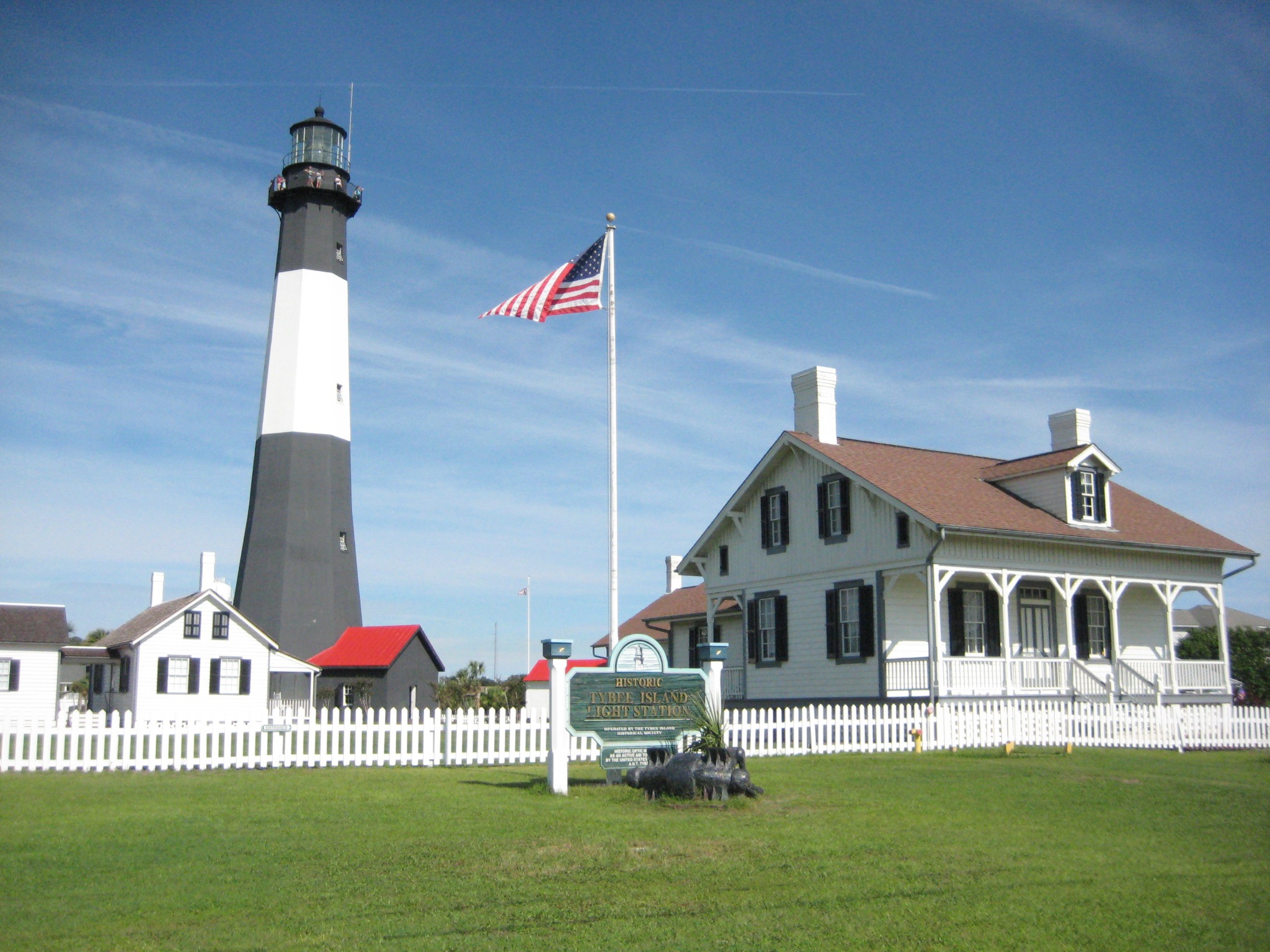
Eighteen miles east, roughly half an hour by car. Five miles of Atlantic beach, a working lighthouse dating to the eighteenth century that you can climb for a view across the sound, a marine science center, and a distinctly unpolished beach-town character that makes a good counterweight to Savannah’s formality. Kayaking and paddleboarding through the marsh creeks are the best way to see the Lowcountry ecosystem that surrounds the city. In July, arrive early and bring more water than you think you need.
Museums and historic houses
- Owens-Thomas House & Slave Quarters — a Regency masterpiece with one of the best-preserved urban slave quarters in the South, interpreted with unusual honesty. Essential.
- SCAD Museum of Art — contemporary art in a converted 1853 railway depot, with rotating exhibitions and strong permanent holdings in African American art, photography and costume.
- Telfair Academy and the Jepson Center — the historic and contemporary halves of the same institution, a few steps apart on Telfair Square.
- Pin Point Heritage Museum — Gullah/Geechee history in a former oyster and crab cannery on the Moon River, and one of the most affecting small museums in the state.
- Juliette Gordon Low Birthplace — the Girl Scouts founder’s family home, and a pilgrimage site for troops from across the country.
- Ships of the Sea Maritime Museum — housed in the 1819 Scarbrough House with a garden that is a fine place to sit.
- American Prohibition Museum — in City Market, more entertaining than it has any right to be, with a working speakeasy.
Eating and drinking
Savannah’s food scene has outgrown its shrimp-and-grits reputation without abandoning it. The classic institutions still hold — The Olde Pink House in its 1771 mansion, Mrs. Wilkes’ Dining Room serving family-style Southern lunch to a queue that forms before opening. But the more interesting cooking has migrated south. The Starland District and Thomas Square now carry the city’s most ambitious kitchens, its best coffee, and a cluster of breweries and natural wine bars. Broughton Street covers the middle ground with a strong run of restaurants between the shops. For a drink with a view, the rooftops at the Alida, Thompson, Perry Lane, the Bohemian and Municipal Grand are all open to non-guests, though reservations help on weekends.
Ghost tours, trolleys and the water
Savannah bills itself as one of America’s most haunted cities and has built a substantial industry on the claim. The tours range from genuinely well-researched historical walks to broad theatrical fun; ask your hotel concierge which operator suits your tolerance for jump scares. Trolley tours are the efficient way to orient yourself on a first day, particularly in July when walking the full district is punishing. Riverboat cruises run day and evening departures from River Street, and the free downtown ferry across to Hutchinson Island is one of the best value experiences in the city — it costs nothing and gives you the classic skyline view.
Shopping
Broughton Street is the main commercial spine, mixing national brands with independent Savannah retailers. Downtown Design District along Whitaker Street handles antiques and interiors. Starland has vintage clothing, records and art supplies. City Market covers the souvenir end with a fair amount of local craft mixed in.
Seasonal events worth planning around
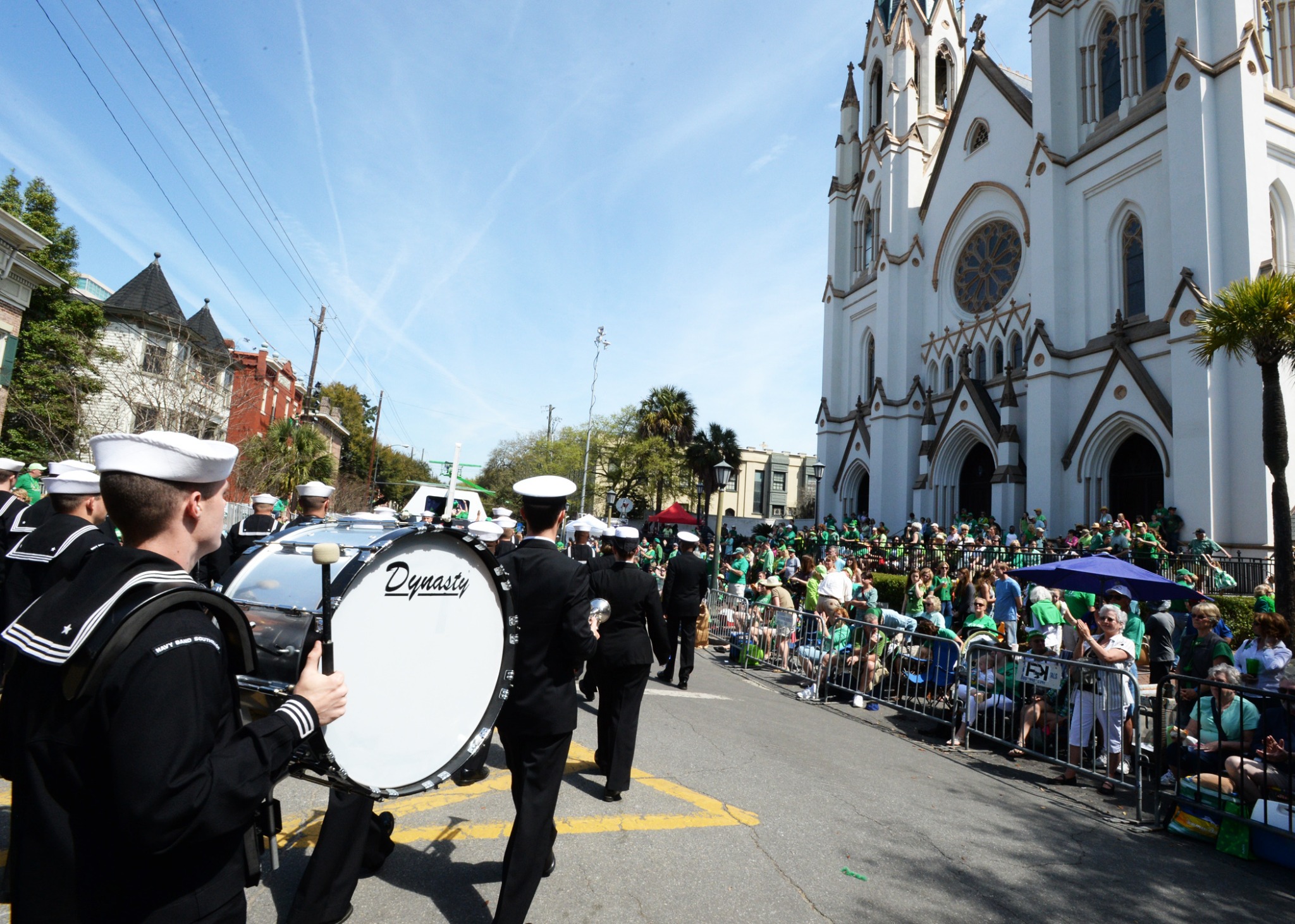
- St. Patrick’s Day (March) — one of the largest parades in the United States. Hotels book out a year ahead and rates roughly double. Either commit or avoid entirely.
- Savannah Music Festival (spring) — a serious, genre-spanning program across venues citywide.
- SCAD Sidewalk Arts Festival (spring) — chalk art fills Forsyth Park; free and genuinely impressive.
- Savannah Food & Wine Festival (autumn) — a week of tastings, dinners and a large public event on River Street.
- Independence Day (July 4) — fireworks over the river, which makes riverfront hotels and rooftop bars extremely desirable and extremely booked. If you are visiting in early July 2026, reserve well ahead.
Where to Stay in Savannah
Savannah’s districts are small and adjacent, but the practical differences between them are real. Here is how to choose.
Best area for first-time visitors: the North Historic District
The blocks between Bay Street and Broughton Street, centered on Ellis Square, City Market and Johnson Square. Everything a first-time visitor comes for is within a ten-to-fifteen-minute walk: River Street below, the squares above, the shops and restaurants of Broughton through the middle. Hotels here — the Andaz, the Alida, the Drayton, the Bohemian, the Hyatt Regency, the AC and the Cotton Sail — cover a wide range of budgets. The trade-off is crowds and noise, particularly at weekends. If you have two or three nights and want to maximize them, stay here.
Best area for luxury hotels: the South Historic District and Forsyth Park
The city’s serious luxury has clustered around Forsyth Park’s northern and western edges. Hotel Bardo, Perry Lane, the Mansion on Forsyth Park and the Gastonian all sit within a few blocks of each other, alongside the finest concentration of squares and the SCAD buildings that keep the area lively. It is quieter, greener and more residential than the north, with better restaurants within walking distance than most visitors expect. River Street is a genuine walk from here — twenty minutes or more — which is fine in April and unappealing at four in the afternoon in July.
Best area for nightlife: River Street and City Market
Savannah’s open-container law permits alcohol in a plastic cup within the Historic District, which shapes the character of these two areas considerably. River Street runs the length of the waterfront with bars, live music and a steady flow of visitors; City Market is the more compact, courtyard-centered version a block inland. The JW Marriott at Plant Riverside anchors the western end with the loudest rooftop in the city. Stay here if the evening is the point; do not stay here if you need silence after eleven.
Best area for families: Hutchinson Island or the mid-district
Families generally do better either at the Westin on Hutchinson Island — pool, space, golf, ferry, free parking — or at a mid-district hotel with a pool such as the DeSoto or the Kimpton Brice. The historic inns, with their antiques, quiet hours and frequent adults-only policies, are usually the wrong format for young children. If you are visiting Tybee Island as part of the trip, staying on the island itself for a night or two is worth considering.
Best area for shopping: Broughton Street
Staying on or immediately off Broughton — the Marshall House sits directly on it — means you can drop bags between shops. The street runs the width of the Historic District, which also makes it a useful east-west axis for reaching anywhere else.
Best area for a quieter stay: the Victorian District and the southern squares
South of Forsyth Park, the Victorian District’s fifty blocks of restored nineteenth-century houses offer real quiet and a strong sense of residential Savannah, at the cost of a longer walk to the tourist core. The southern squares — Monterey, Calhoun, Whitefield — are similarly peaceful. Bellwether House and the Gastonian both draw on this atmosphere.
Best area for creatives and repeat visitors: Starland and Thomas Square
Not a hotel district in any conventional sense, but if you have done the Historic District and want to see where Savannah actually eats, drinks and makes things, this is it: murals, breweries, galleries, food halls, vintage shops and the best independent restaurants in the city. Base yourself on the southern edge of the Historic District and you can reach it in a short rideshare or a fifteen-minute walk down Bull Street.
Best area for river views: Eastern Wharf and the Bay Street bluff
Thompson Savannah at Eastern Wharf and the cluster of hotels along the Bay Street bluff — the Alida, AC, Cotton Sail, Bohemian, Hyatt Regency, River Street Inn — deliver the shipping-channel views. Eastern Wharf is calmer and newer; the bluff is older and more central. See our full where to stay in Savannah breakdown for more.
Tips for Booking Hotels in Savannah
A few things about this market are worth understanding before you commit.
Seasonality
Spring is Savannah’s peak — March through May, when the azaleas are out and the weather is close to ideal. Rates are highest and availability thinnest then. Summer, including July, is the low season for a straightforward reason: heat and humidity. Daytime highs run into the low nineties, nights stay in the mid-seventies, and afternoon thunderstorms are common. That is genuinely uncomfortable for extended walking, but it also means the hotels that are impossible to book in April become available, and rates soften. Autumn recovers as the weather does. Winter is quiet and mild, with the lowest rates of the year outside of holiday weeks.
Events that move prices
St. Patrick’s Day is the single largest factor in the Savannah hotel calendar. The parade draws crowds that dwarf the city’s normal population, and rates around it can climb dramatically while minimum-night stays appear across the market. Independence Day, the Savannah Music Festival, SCAD graduation weekends and the Food & Wine Festival all create localized spikes. If your dates are flexible, checking against the city’s event calendar before booking is worth the five minutes.
Book earlier than you think for the small properties
A forty-four-room hotel or a sixteen-room inn sells out in a way a 351-room Hyatt does not. For Municipal Grand, the Gastonian, Bellwether House or the Kehoe House, two to three months ahead is reasonable in shoulder season and considerably more around major events. Large branded properties can often be picked up much closer in, sometimes at better rates as inventory releases.
Parking is a real cost
This is the line item that surprises visitors. Downtown Savannah hotels typically charge a nightly fee for valet parking, and in the Historic District — where space is genuinely scarce and self-parking often is not offered — rates in the region of the mid-thirties to low-forties per night are common. Over four nights that is a meaningful addition to your total. If you are driving, factor it in; if you are flying and staying downtown, seriously consider skipping the rental car, since the Historic District is walkable and rideshares handle Bonaventure, Wormsloe and Tybee perfectly well.
Taxes and fees
Savannah applies a hotel/motel excise tax alongside state and local charges, plus per-room per-night fees at both state and city level. Some hotels — the Drayton is one — also levy a daily destination or amenity charge. These are not always fully reflected in the headline rate you see on a comparison site, so check the total at the payment screen rather than the nightly figure. Where a destination fee returns credits you will actually use, it can be reasonable value; where it does not, treat it as a rate increase.
Weekday versus weekend
Savannah is primarily a leisure destination, so weekend nights typically carry a premium over midweek — the reverse of a business-heavy city. A Sunday-to-Wednesday stay will usually cost less than Thursday-to-Sunday for the same room, and the squares are considerably more pleasant midweek.
Room size and the historic-building trade-off
Converted mansions and warehouses have irregular rooms. Two guests booking the same category at the same inn can end up in noticeably different spaces. If size matters, look at the specific room type rather than the headline photograph, read recent reviews for the property, and consider calling the inn directly — the small properties will usually tell you honestly which rooms are the good ones.
When to pay up for a view
River-view upgrades in Savannah are one of the better value upsells in American travel, because the shipping channel is active and the ships are enormous. At the Alida, the Bohemian, the AC, River Street Inn and Thompson, the difference between an interior room and a river-facing one materially changes the stay. At inland properties, view upgrades matter far less.
Breakfast and inclusions
At the historic inns, breakfast is almost always included and is usually a proper hot meal rather than a continental spread, along with an evening wine or social hour. That has real economic value — factor it in when comparing an inn against a hotel with a similar nightly rate but no inclusions. At the larger hotels, paid breakfast is generally skippable given how many good breakfast options sit within a few minutes’ walk.
Airport access
Savannah/Hilton Head International Airport is roughly twenty to thirty minutes from the Historic District depending on traffic, and rideshares serve it reliably. Some hotels offer shuttles; most do not. It is a small, easy airport, and connections through Atlanta or Charlotte are the usual route from most of the country.
Cancellation flexibility
Small inns generally enforce stricter cancellation windows than the chains — seven to fourteen days is common, and around major events those windows tighten further with minimum-stay requirements attached. Hurricane season runs June through November on this coast; if you are booking in that window, a flexible rate is worth the modest premium.
Frequently Asked Questions About the Top 25 Hotels in Savannah
What are the best hotels in Savannah?
Hotel Bardo Savannah leads this ranking for its combination of design, dining at Saint Bibiana, a genuine resort pool and a Forsyth Park position. Municipal Grand, the city’s most acclaimed recent opening, follows closely — it appeared on Travel + Leisure’s 2026 It List and has climbed to the top of Tripadvisor’s Savannah rankings. Perry Lane Hotel offers the most complete full-service luxury package, Thompson Savannah the best contemporary rooms and river views, and the Mansion on Forsyth Park the most distinctive interiors. Among the historic inns, the Kehoe House and the Gastonian are the standouts.
What is the best area to stay in Savannah for first-time visitors?
The North Historic District, roughly between Bay Street and Broughton Street around Ellis Square and City Market. It puts River Street, the squares, the main shopping street and the majority of the city’s restaurants within a short walk, which is exactly what you want on a first visit — particularly in July, when minimizing walking distance is a genuine consideration. The Andaz Savannah, the Alida and the Drayton are all well positioned here across different price points.
What are the best luxury hotels in Savannah?
Hotel Bardo, Perry Lane Hotel (a Luxury Collection property), Thompson Savannah, the Mansion on Forsyth Park and Municipal Grand form the top tier. Bardo holds a Michelin Key; Perry Lane offers the widest range of on-site facilities; Thompson has the largest contemporary rooms. Rates at all five vary considerably by season, and July generally represents better value than spring. For more, see our guide to best luxury hotels in Savannah.
What are the best boutique hotels in Savannah?
Municipal Grand, with forty-four rooms, is the current benchmark. The Drayton Hotel (Curio Collection by Hilton) offers boutique character with brand backing and a strong bar program. Bellwether House provides an adults-only, wellness-focused alternative, and Kimpton Brice delivers a more relaxed, pet-friendly boutique experience with a courtyard pool.
What are the best family-friendly hotels in Savannah?
The Westin Savannah Harbor Golf Resort & Spa is the strongest family choice — pool complex, space, golf, and a water taxi that turns the commute downtown into an activity. In the Historic District, the DeSoto and the Hyatt Regency both offer pools and the room configurations families need. Most of Savannah’s historic inns are poorly suited to young children, and several have minimum age policies.
Where should couples stay in Savannah?
The Gastonian remains the classic romantic choice — two 1868 mansions, seventeen antique-filled rooms, working fireplaces and claw-foot tubs on a quiet street near Forsyth Park. The Kehoe House is its equal in a grander Queen Anne setting on Columbia Square. For couples who prefer contemporary design over antiques, Hotel Bardo, Municipal Grand and Thompson Savannah are the picks. Bellwether House suits couples wanting a spa-oriented, child-free stay.
Is it better to stay near River Street or near Forsyth Park?
It depends on what you want your evenings to look like. River Street puts you in the middle of the bars, live music and riverboat traffic, at the cost of noise and crowds. Forsyth Park is quieter, greener and closer to the city’s best luxury hotels and southern squares, but a twenty-minute-plus walk from the waterfront — which is a longer proposition in July heat than it appears on a map. Central options such as the DeSoto or Municipal Grand let you reach both comfortably.
How far in advance should I book a hotel in Savannah?
For small inns and boutique hotels, two to three months ahead is sensible in shoulder season and considerably longer around St. Patrick’s Day, which can require booking close to a year in advance. Larger branded hotels are usually available much nearer to the date. July is one of the easier months to book, though the days around Independence Day are an exception, particularly at riverfront properties.
What is the best time of year to visit Savannah?
March through May offers the most comfortable weather and the fullest events calendar, which is also why it is the most expensive and most crowded. Autumn, from late September through November, is the quieter alternative with similar conditions. July is hot and humid with frequent afternoon storms, but rates and availability are correspondingly better, and hotels with pools, courtyards and shaded terraces come into their own.
Are hotels in Savannah expensive?
Savannah spans a wide range. Historic inns and mid-range riverfront hotels typically sit well below equivalent properties in Charleston or major coastal resort markets, while the newest luxury arrivals command rates comparable to top-tier hotels in much larger cities. Rates move sharply with the season and with events, so the same room can differ substantially between March and July. Remember to account for parking fees, hotel taxes and any destination charge when comparing totals.
Do Savannah hotels have pools?
Fewer than you might expect, because most historic buildings cannot accommodate one. Among the properties on this list, Hotel Bardo, Municipal Grand, Perry Lane, Thompson Savannah, the Mansion on Forsyth Park, Andaz Savannah, Kimpton Brice, the DeSoto, the Hyatt Regency and the Westin Savannah Harbor all offer pools. If you are visiting in summer, this should weigh heavily in your decision.
What should I look for when choosing a hotel in Savannah?
Three things, in this order. First, which square or street you are on, since walking distance determines how much of the city you will actually see. Second, whether the building’s age works for or against you — historic conversions deliver atmosphere but often bring thin walls, irregular rooms and limited elevator access. Third, the full cost including parking, taxes and any destination fee, which can add meaningfully to a headline rate that looked competitive.
Which Savannah hotels are best for nightlife?
The JW Marriott Savannah Plant Riverside District, with its Electric Moon Skytop Lounge and a district full of bars and live music. The Bohemian Hotel Savannah Riverfront and River Street Inn put you directly on the waterfront strip, and Andaz Savannah sits a few steps from City Market’s courtyard bars. If you want the rooftop scene without staying in the noise, Hotel Bardo, Thompson and the Alida all have destination bars with quieter guest floors.
Final Thoughts
Savannah’s hotel market has grown up quickly. A decade ago the choice was essentially between a grand old inn with sherry in the parlor and a business hotel with a river view. Today the city supports Michelin-recognized design properties, a Luxury Collection flagship, a converted power station with ten restaurants in it, and a bench of historic inns that are still, in several cases, the best expression of Southern hospitality anywhere in the country. That range is a genuine asset. It also means the question is no longer “which hotel is best” but “which version of Savannah do you want.”
If you want the city as a resort — pool, cocktails, long lunches, a room you are reluctant to leave — Hotel Bardo and Municipal Grand are where that instinct is best served. If you want to be inside the architecture, sleeping under a nineteenth-century ceiling with breakfast served in a dining room built by someone whose portrait still hangs there, the Kehoe House and the Gastonian are hard to improve on. If you want to walk out of the lobby into the thick of it, the North Historic District around Ellis Square solves the problem cleanly. And if you are here in July with children, a car and a tolerance for a short ferry ride, Hutchinson Island quietly makes more sense than most people realize.
Whatever you choose, choose for location first. Savannah is a city best experienced at walking pace, in the shade, with somewhere to sit every few blocks — and the right hotel is simply the one that lets you do that without thinking about it. Rates in July tend to be more forgiving than in spring, availability is broader, and the properties with pools and courtyards earn their rates in a way they never quite do in March.
Compare your dates across a few of the properties above before committing. Prices in this market move significantly by season, by day of the week and by event calendar, and the same room can look very different depending on when you check.
Click here to compare hotels and current rates in Savannah
Affiliate Disclosure: We may earn a commission if you book through links on this page, at no additional cost to you. Our recommendations come from independent research into location, guest feedback, design, service, amenities and overall value — not from payment for placement.